
Donec efficitur, ligula ut lacinia
viverra, lorem lacus.
Donec efficitur, ligula ut lacinia
viverra, lorem lacus.
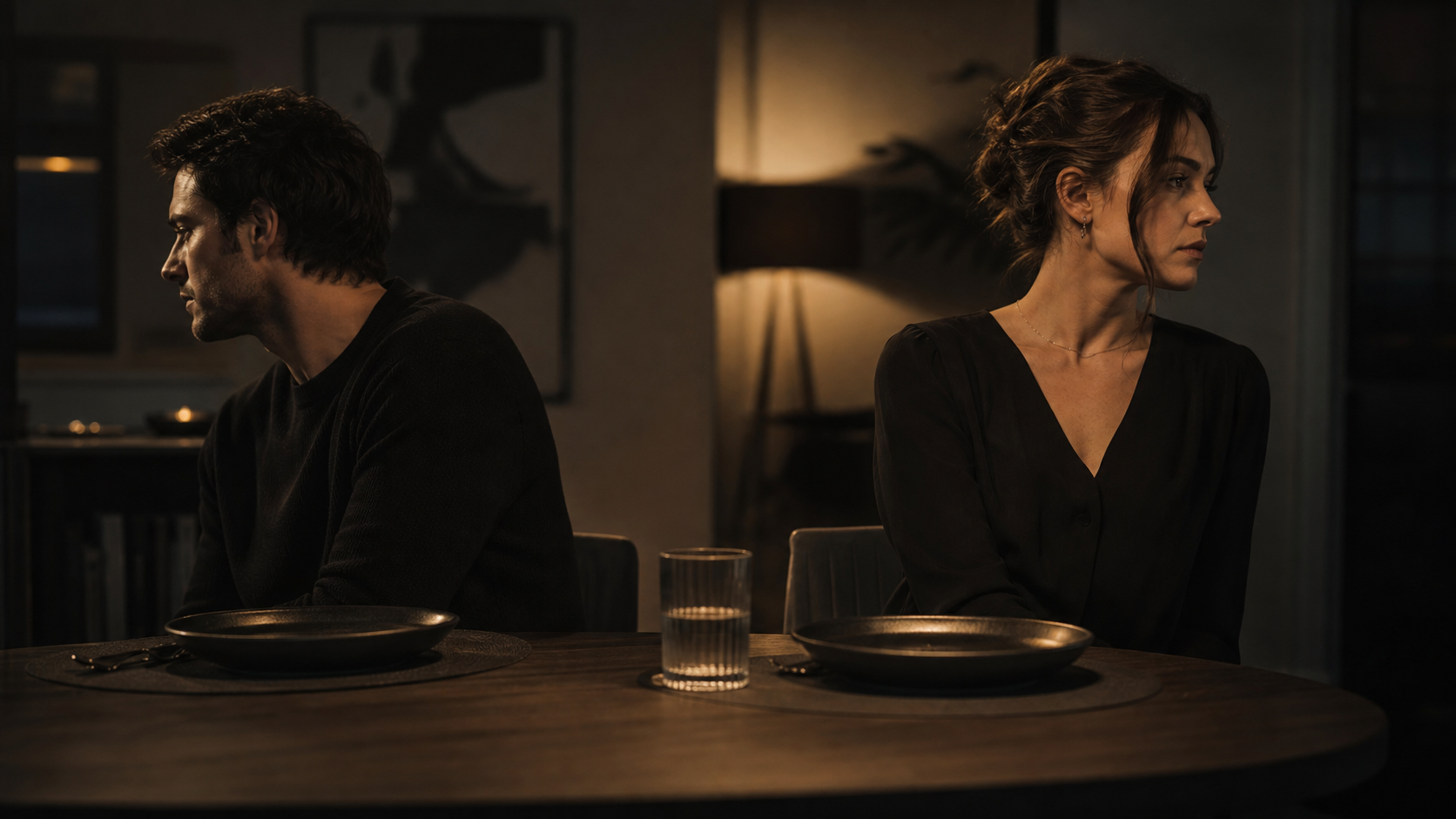
Contempt does not always arrive as a fight. Sometimes it begins as an eye roll, a sarcastic tone, or a quiet loss of respect. This article explores John Gottman’s research on why contempt is one of the strongest predictors of divorce, and how couples can begin choosing repair before the pattern becomes permanent.
By the time most couples seek help, the damage has already been done for years. Here is the science that explains why and what you can do before it is too late.
Some relationships do not end when someone leaves. They end months or years earlier. They end in an eye roll during a vulnerable conversation. They end in a sarcastic comment disguised as a joke. They end when one partner slowly stops seeing the other as someone to understand and starts seeing them as someone to tolerate.
Most people imagine the end of a relationship as a dramatic event. Yet some of the most painful endings happen quietly. Love is rarely destroyed in a single moment. It erodes through thousands of small interactions that slowly replace admiration with resentment and curiosity with judgment.
For decades, psychologist Dr. John Gottman dedicated his career to understanding one of the most important questions in human relationships: why do some couples stay deeply connected while others slowly fall apart? To find the answer, he created what became known as the Love Lab, an apartment designed to feel like an ordinary home. Couples spent time there while researchers observed their conversations, emotional reactions, facial expressions, body language, tone of voice, and communication patterns.
Over more than forty years, Gottman and his colleagues studied tens of thousands of couples. What emerged from that research was extraordinary. By observing only a few minutes of interaction, researchers could predict with remarkable accuracy which relationships would survive and which would eventually collapse.
Based on what he observed inside that apartment, Gottman developed something that sounds almost impossible: the ability to predict with 93.6% accuracy which couples would divorce within six years.
Not through guesswork. Not through intuition.
Through pure pattern recognition, built on mathematics, statistics, and thousands of hours of watching real couples navigate real conflict, real tenderness, and real pain.
Five minutes of observation. That was enough.
The implications are staggering. Because it means the seeds of a relationship’s end are often planted long before either partner realizes they are in trouble.
Through his research, Gottman identified four destructive communication patterns that when left unaddressed, predict the collapse of a relationship with terrifying consistency.
He called them The Four Horsemen of the Apocalypse.
Criticism: not complaining about a behavior, but attacking who your partner fundamentally is as a person. “You always do this. You never think about anyone but yourself.”
Contempt: the deadliest of all four. Scorn, mockery, sarcasm, eye-rolling. The quiet communication of superiority: you are beneath me.
Defensiveness: deflecting responsibility, turning every concern into a counter-attack. Making your partner feel they must fight just to be heard.
Stonewalling: the complete emotional shutdown. Going silent. Withdrawing so completely that the conversation has no one left to talk to.
Any one of these, left to grow unchecked, can erode a relationship from the inside. Together, they are almost always fatal to a marriage.
Of all four horsemen, contempt stands alone.
It is not the loudest pattern. It is not the most dramatic. But Gottman’s data was unmistakable. Contempt is the number one predictor of divorce, more powerful than any other single factor in his research.
And it is not hard to understand why, once you see what contempt actually does.
Contempt does not just attack what your partner did. It attacks who they are. It communicates, beneath every word and gesture, a fundamental disgust, a belief that the other person is not just wrong, but unworthy.
It shows up as an eye roll during a vulnerable moment. As a mocking tone when your partner makes a mistake. As sarcasm that has long since stopped being playful and started being a weapon.
Small gestures. Catastrophic consequences.
This is what makes it so dangerous.
Contempt is not born in a single argument. It is fed slowly, quietly by every unresolved conflict that was swept under the rug. Every frustration that was swallowed instead of spoken. Every moment one partner felt unseen, unheard, and chose silence over honesty.
Over time, those unexpressed resentments do not disappear. They ferment. They harden. They turn into something darker than anger, something colder than sadness, a quiet, corrosive belief that the person across from you is not worthy of your effort.
Gottman’s research showed that when contempt takes hold, something profound breaks in the couple’s perception of each other. Partners lose the ability to access positive memories of their relationship. They forget, genuinely forget the qualities that made them fall in love.
The love is not gone. But contempt has buried it under layers of accumulated anger.
Here is the part of Gottman’s research that most people never hear about, and perhaps the most striking finding of all.
The damage contempt causes is not only emotional.
Couples who regularly experience contempt in their relationship show measurably weakened immune systems. They get sick more often. Their bodies reflect the stress of living in a relationship where they do not feel respected.
The body keeps score. The soul keeps score.
Every moment of contempt, every dismissive glance, every mocking remark it leaves a mark that goes far beyond the conversation that triggered it. This is not metaphor. This is physiology.
Which means protecting your relationship from contempt is not just an act of love. It is an act of self-preservation.
One of the most counterintuitive findings from the Love Lab involves not what couples say during conflict but how they begin.
Gottman found that you can predict how a difficult conversation will unfold 96% of the time based solely on its opening moments.
The first three minutes set the emotional tone for everything that follows. A harsh start, a critical opening, a contemptuous tone, a sarcastic first sentence, creates a momentum that almost never reverses itself within that conversation.
This is what researchers call the “harsh startup” effect. And it matters more than most couples realize.
The way you enter the room matters. The first word matters. The tone beneath the word, the one your partner hears even when they are not consciously listening matters most of all.
Gottman’s 93.6% accuracy in predicting divorce is only accurate when the patterns remain unchanged.
Because the same research that identified the Four Horsemen also identified their antidotes. And the most powerful antidote to contempt is something surprisingly simple: a culture of appreciation.
Not grand romantic gestures. Not expensive vacations or anniversary dinners. Small, consistent, genuine acts of noticing the good in the other person. Expressing admiration. Saying out loud what you silently respect about them.
The couples who last, Gottman found, are not the ones who never fight. They are the ones who fight and still choose each other. Who disagree and still hold onto a foundation of genuine respect.
Contempt is a learned pattern of behavior. So is love. And every day, in a thousand small moments, you are practicing one or the other.
The question worth sitting with is: which one are you practicing most?
You do not need a research lab to audit your own relationship.
Start paying attention to the micro-moments; the tone of voice, the facial expressions, the language you reach for when you are frustrated. Notice whether you are attacking the behavior or the person. Notice whether there is warmth underneath the argument, or whether the warmth has slowly been replaced by distance.
If contempt has taken root, it is not the end. But it does require honest acknowledgment, and usually the help of a skilled couples therapist who understands the difference between a relationship that is struggling and one that has quietly given up.
The Love Lab showed us that the end of a marriage is almost never a single dramatic event. It is a slow accumulation of small moments where contempt was chosen over curiosity, where scorn replaced empathy, where two people stopped trying to understand each other and started keeping score.
Knowing this is the first step toward choosing differently.
Map the patterns in your relationship, before they map the outcome for you.
