
Donec efficitur, ligula ut lacinia
viverra, lorem lacus.
Donec efficitur, ligula ut lacinia
viverra, lorem lacus.
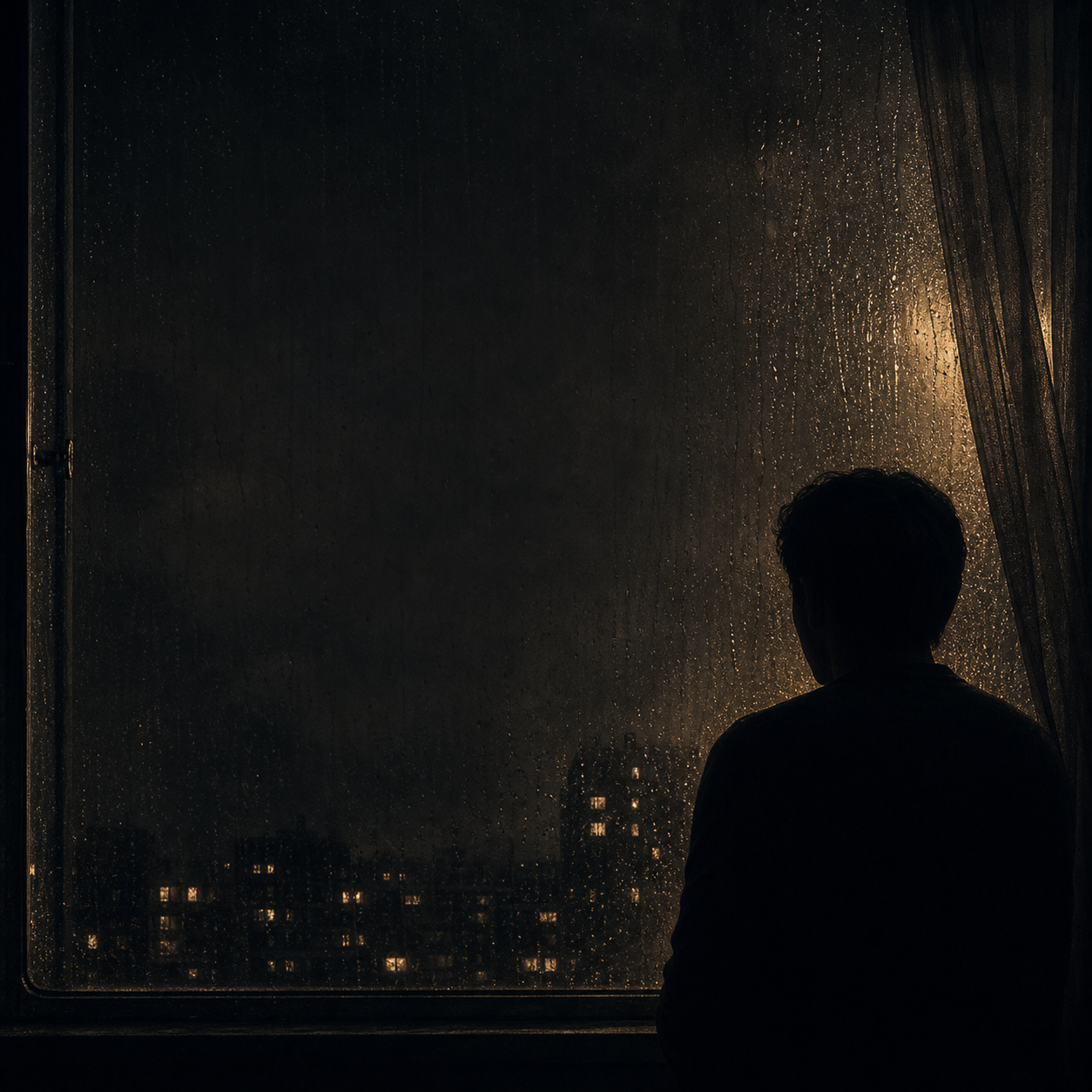
Loneliness is not weakness. It is the body and soul responding to a world that offers constant access but too little real presence, belonging, and emotional truth.
Loneliness, The Modern World Disease. A poetic psychology article about loneliness, social isolation, emotional disconnection, social media, COVID 19, and the human need for real belonging.
There is a strange silence living inside the loudest age in human history. We wake up with notifications. We fall asleep beside glowing screens. We can send a message across the world in one second, see the face of someone we love through glass, watch strangers cry, laugh, confess, break down, succeed, disappear, and return again. We can be reached at any hour. We can be seen by hundreds and still feel unseen by one.
This is the paradox of our time. We are constantly connected, yet many of us are starving for contact. Not contact as information. Not contact as reaction. Not contact as a heart emoji, a voice note, a like, a forwarded video, or a quick reply sent between two tasks. I mean real contact. The kind that reaches the nervous system before it reaches the mind. The kind where your body softens because another human is truly there with you.
Loneliness has become one of the modern world diseases, not because we are weak, dramatic, or too sensitive, but because the world has changed faster than the human psyche can digest. We were not built to live this fragmented. We were not built to be surrounded by faces and deprived of presence. We were not built to carry our wounds privately while performing normality publicly. We were not built to confuse visibility with belonging.
When I look at loneliness, I do not see only an emotional problem. I see a spiritual and biological mismatch. We are ancient bodies living inside modern systems. Our brain still searches for the fire circle, the familiar voice, the shared meal, the tribe that knows when something is wrong before we have to explain it. But instead, many of us live in apartments stacked above each other without knowing our neighbors. We work through screens. We speak through captions. We celebrate online. We grieve online. We date online. We compare online. Then we wonder why the body still feels hungry.
Because the body knows. The body knows the difference between being watched and being held. It knows the difference between being followed and being known. It knows the difference between being entertained and being connected.
For most of human history, loneliness as we know it today would have been unusual, not because people were happier or life was easier, but because life required belonging. Two hundred years ago, five hundred years ago, and long before that, most people lived inside tight social structures. Villages, families, farms, religious communities, guilds, markets, shared labor, shared rituals, shared danger. Privacy was rare, sometimes painfully rare, but total emotional invisibility was also less common. People depended on one another for food, protection, childbirth, illness, work, survival, mourning, and celebration.
This does not mean the past was romantic. It was hard. It could be oppressive. Families could be suffocating. Communities could punish difference. Many people had little freedom to choose who they became. But one thing was true. Human life was organized around repeated contact. You saw the same faces. You knew the rhythm of others. Your absence was noticed. Your presence had a place.
Modern life gave us freedom, mobility, privacy, individual choice, and the ability to reinvent ourselves. These are beautiful things. But they came with a cost we are only beginning to name. We gained independence and lost interdependence. We gained options and lost rootedness. We gained convenience and lost the small daily rituals that once stitched us into one another.
We are social beings down to the bones. Anthropologist Robin Dunbar became known for research suggesting that the human brain can only maintain a limited number of stable social relationships, often discussed around the number 150. Whether that exact number is debated or not, the deeper truth matters more. The human mind evolved inside groups. Our intelligence did not grow only to solve tools, weather, food, or danger. It grew to read faces, track alliances, sense rejection, cooperate, gossip, repair conflict, protect children, recognize belonging, and survive together.
Research note: Robin Dunbar's social brain research: The Social Brain Hypothesis.
This means loneliness is not just sadness. It is an alarm. It is the nervous system saying, I do not feel held by the human field around me. Something in me does not feel socially safe.
That is why loneliness hurts so deeply. It touches the oldest part of us. In ancient conditions, being cut off from the group was not just uncomfortable. It could mean death. The lonely body does not always understand that we now have electricity, food delivery, locks on doors, streaming platforms, and online shopping. The lonely body still reads isolation as danger. It becomes alert. It scans. It overthinks. It asks, who would come if something happened to me. Who truly knows me. Who would notice if I disappeared emotionally before I disappeared physically.
The U.S. Surgeon General warned in 2023 that loneliness and social isolation are serious public health issues, linked with increased risk for heart disease, stroke, dementia, depression, anxiety, and premature death. This is not just a private ache. It is a public health signal. A society can become technologically advanced and emotionally undernourished at the same time.
Research note: The U.S. Surgeon General's 2023 advisory: Our Epidemic of Loneliness and Isolation.
And then came COVID 19.
I do not think we have fully understood what happened to us. We talk about the pandemic as a medical crisis, which it was. We talk about lockdowns, masks, fear, vaccines, politics, and economic pressure. But underneath all of it, COVID 19 was also a mass relational trauma. It interrupted the most basic human regulation system we have, each other.
For months and years, human closeness became complicated. Touch became suspicious. Breath became dangerous. Faces were covered. Elders were separated. Children lost classrooms, playgrounds, and social practice. Teenagers lost some of the most important developmental years for identity, friendship, flirting, embarrassment, belonging, and emotional rehearsal. Adults worked from bedrooms and kitchen tables. Families were trapped together or separated completely. Funerals became restricted. Weddings shrank. Hospitals became places where people sometimes died without the hands that loved them.
Something in the collective nervous system learned distance. Something learned hesitation. Something learned that other bodies could be threat. Even after the world reopened, many people did not simply return. Some returned with social muscles weakened. Some returned with grief they never had time to process. Some returned with suspicion. Some returned with a new dependence on screens. Some did not return at all.
COVID did not create loneliness from nothing. It exposed the loneliness already sitting under the floorboards of modern life. It showed us how many relationships were built on convenience and proximity, not depth. It showed us how many people had no real emergency circle. It showed us how quickly work could continue while the soul quietly fell apart. It showed us how much of life had already become transactional.
And social media stepped into that wound like both medicine and poison.
I do not hate social media. I use it. I believe it can educate, comfort, awaken, and connect people who would never have found each other otherwise. A single post can make someone feel less ashamed. A story can give language to pain. A community can form around a shared wound. For people who are isolated, neurodivergent, grieving, chronically ill, different, or living in places where they feel misunderstood, the internet can become a doorway.
But the same doorway can become a room we never leave.
Social media gives us the feeling of social contact without always giving us the nutrition of relationship. It gives us access to people without the responsibility of mutual presence. We can consume the emotional lives of others while revealing almost nothing real about ourselves. We can mistake being stimulated for being connected. We can scroll through hundreds of human fragments and end up more aware of everyone and less bonded to anyone.
The platforms are designed to keep our attention, not necessarily to heal our attachment. They reward performance, speed, beauty, outrage, novelty, and emotional intensity. But real connection is slower. It requires repetition. It requires patience. It requires listening to the same person across ordinary days. It requires boredom sometimes. It requires repair after misunderstanding. It requires seeing the unedited human, not only the chosen angle.
This is one of the cruelest parts of modern loneliness. We are surrounded by curated evidence that other people are living more beautifully than we are. More loved. More desired. More productive. More chosen. More socially fluent. More spiritually evolved. More healed. More successful. More interesting. We compare our internal weather to someone else’s public architecture and then call ourselves behind.
The lonely mind becomes vulnerable to comparison. It starts building stories. Everyone has their people except me. Everyone is invited except me. Everyone knows how to live except me. Everyone is moving forward except me. These thoughts may not be true, but loneliness makes them feel true. It narrows the lens until absence becomes identity.
And then we begin protecting ourselves from the very thing we need.
This is where loneliness becomes a loop. We feel unseen, so we withdraw. We withdraw, so fewer people see us. Fewer people see us, so the belief deepens. We crave intimacy, but we fear rejection. We want someone to ask how we are, but we do not want to explain the depth of what we are carrying. We want to be chosen, but we are exhausted from proving we are worth choosing. We want community, but the idea of entering a room where everyone already seems connected feels unbearable.
Loneliness is not always the absence of people. Sometimes it is the absence of emotional truth. You can be lonely in a marriage. Lonely in a family. Lonely in a crowded office. Lonely at dinner with friends who know your schedule but not your inner life. Lonely beside someone who touches your body but never reaches your mind. Lonely because everyone knows the version of you that functions, jokes, posts, works, helps, performs, manages, and survives, but almost nobody knows the version of you that quietly wonders, is this all there is.
That kind of loneliness is the most invisible. It does not look like isolation from the outside. It looks like success. It looks like social life. It looks like being busy. It looks like independence. It looks like being easy to love because you never need too much.
We have built a culture that admires the person who needs no one. The self made person. The private person. The one who can handle everything alone. The one who does not burden others. The one who replies, I am fine, and keeps moving. But human beings were never meant to be emotionally self sufficient. We can be responsible for ourselves without pretending we do not need care.
Somewhere along the way, many of us began to confuse needing people with weakness. But the need for connection is not weakness. It is design. A baby’s nervous system is regulated through another body. Children learn who they are through reflected emotion. Adults continue to heal, soften, and stabilize through safe relationships. We do not outgrow the need to be witnessed. We only learn to hide it better.
Research note: The World Health Organization frames social connection as a global health priority: The WHO Commission on Social Connection.
Loneliness is generated by many things at once. Urban life can create it, because density is not the same as intimacy. Work culture can create it, because productivity often replaces community. Moving away from home can create it. Divorce can create it. Grief can create it. Immigration can create it. Shame can create it. Trauma can create it, because trauma teaches the body that closeness is unsafe even when the heart still longs for it. Poverty can create it, because survival leaves less time and energy for social life. Success can create it too, because the higher someone climbs, the fewer people they may trust with their unpolished truth.
Mental health struggles can deepen it. Depression says, do not reach out, you are too much. Anxiety says, do not reach out, they will reject you. Shame says, do not reach out, if they really see you, they will leave. Pride says, do not reach out, you should be above this. Burnout says, do not reach out, you have no energy left to be a person.
But loneliness also grows from the architecture of daily life. We order food instead of eating together. We work remotely without replacing the lost casual contact. We move often. We rent temporarily. We live farther from extended family. We outsource care. We replace shared rituals with private consumption. We communicate through short bursts, then wonder why our relationships feel thin.
The effects are not only emotional. Loneliness changes how we interpret the world. A lonely person can become more sensitive to rejection, more suspicious of neutral signals, more likely to read silence as abandonment. The brain begins scanning for proof that it does not belong. This can make connection harder, because the very wound that needs closeness can start pushing closeness away.
That is why telling lonely people to just go out more is not enough. Loneliness is not solved only by proximity. It is healed by meaningful, repeated, safe connection. It is healed by relationships where the nervous system learns, I can exist here without performing. I can be honest here without being punished. I can need here without being humiliated. I can be quiet here and still belong.
We need to rebuild the small human rituals. Not dramatic ones. Small ones. Eating together without phones. Calling instead of only texting. Sitting with someone after a hard day. Learning our neighbors’ names. Joining spaces where the same people show up repeatedly. Letting friendships become inconvenient again. Asking better questions. Answering more honestly. Creating homes where people gather. Creating workplaces where humans are not treated like machines with calendars. Creating communities that notice absence.
And we need to become braver in the way we reveal ourselves. Not to everyone. Not without discernment. But to the right people, slowly, truthfully. Loneliness survives in secrecy. It feeds on the belief that we are the only ones feeling this way. But the moment one person says, I feel it too, the room changes. The private prison gets a window.
I think many of us are not only lonely for people. We are lonely for a way of living that feels human. We are lonely for slowness. For shared tables. For being remembered. For being expected somewhere. For walking into a place where our face matters. For friendships that are not maintained only through memes and delayed replies. For families that know how to speak beyond logistics. For love that is not constantly interrupted by a phone lighting up.
Loneliness, the modern world disease, is not asking us to become less digital only. It is asking us to become more embodied. More present. More honest. More communal. More willing to need and be needed.
We cannot return completely to the tribe, and maybe we should not romanticize it. But we can create modern tribes with more consciousness. Not tribes built on sameness, exclusion, or pressure, but on presence. A few people who know the real story. A few places where we are not only useful. A few rituals that repeat. A few honest conversations that remind the body it is not alone here.
Maybe the question is not why everyone feels lonely despite being constantly connected. Maybe the question is what kind of connection are we calling connection.
Because the soul does not count followers. The nervous system does not feel safe because a message was delivered. The heart does not heal because a post was seen. We need eyes that stay. Voices that return. Hands that help. Rooms where we can take the mask off. People who do not only consume our image, but care about our becoming.
We are not broken for feeling lonely in this world. In many ways, loneliness is the sane response to an age that keeps replacing presence with access. It is the part of us that still remembers we were made for each other.
And maybe that is the beginning of the way back. Not a grand revolution. Not a perfect community. Just one honest reach. One meal. One phone call. One door opened. One message that says, I have been thinking about you. One moment where we stop performing connection and start practicing it.
The modern world taught us how to stay available. Now we have to teach ourselves how to be truly reachable again.
