
Donec efficitur, ligula ut lacinia
viverra, lorem lacus.
Donec efficitur, ligula ut lacinia
viverra, lorem lacus.
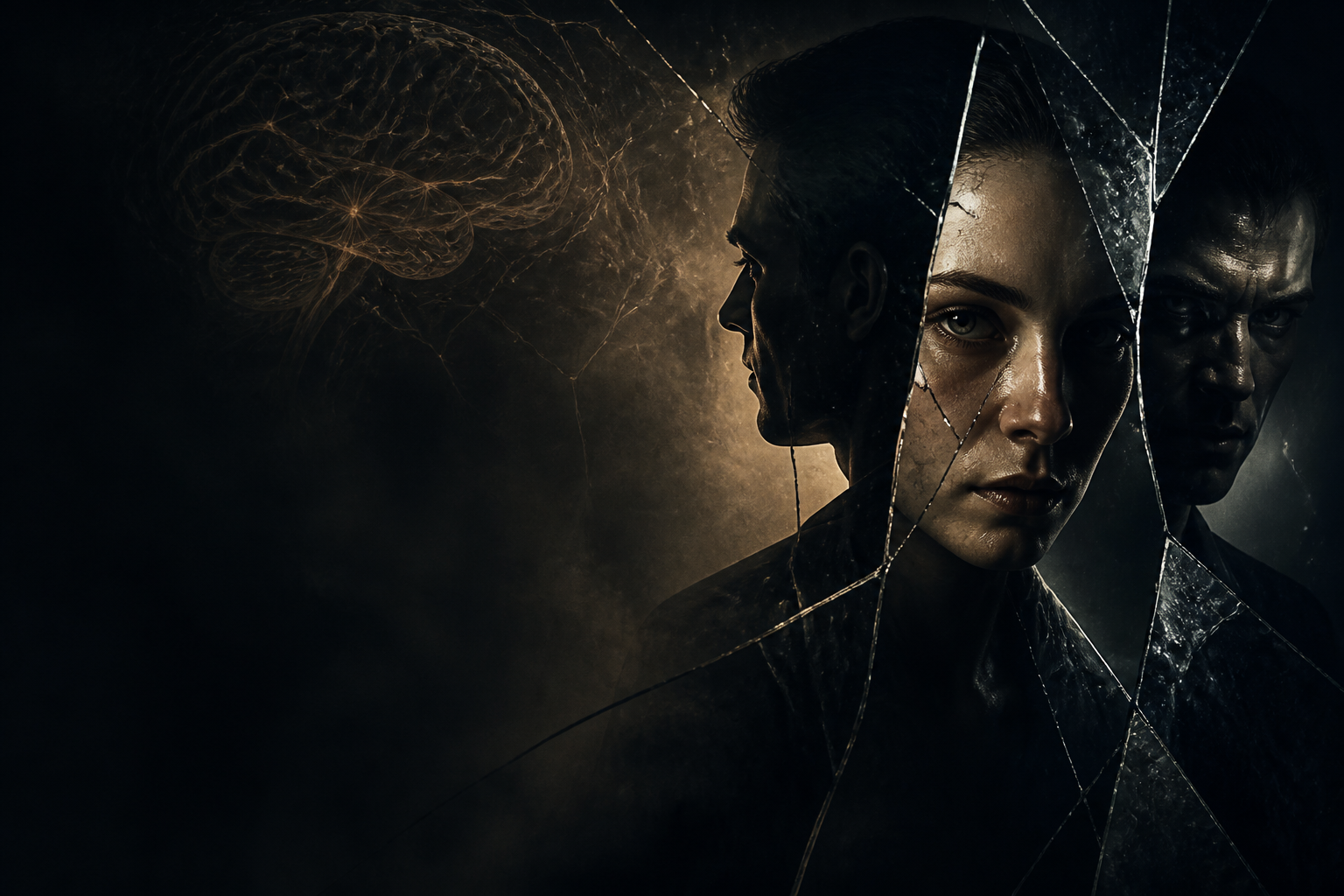
: A clear and human psychology article on narcissists, psychopaths and sociopaths, the nature versus nurture debate, true crime psychology, trauma bonding, manipulation, empathy, antisocial personality disorder and the dark side of human behavior.
A human, clear and research informed blog article on true crime psychology, narcissistic personality disorder, psychopathy, sociopathy, trauma bonding, manipulation and the difference between nature and nurture.
Somewhere, while you are reading this, someone is being charmed by a person who does not love them back in the ordinary human way. Someone is being blamed for pain they did not cause. Someone is saving messages because their own memory no longer feels enough. Someone is sitting across from a smile that looks warm, while something colder is moving underneath it.
This is why the subject of narcissists, psychopaths and sociopaths refuses to leave us alone. It is not only a true crime fascination. It is a survival question. We want to know how danger can look so normal, how cruelty can wear perfume, how a person can speak the language of love, apology, loyalty or morality while using those same words as tools.
True crime pulls us close because it exposes the distance between appearance and reality. The dangerous person is rarely introduced by thunder. They may have a job, a partner, a family, a social media profile, neighbors who call them pleasant and friends who remember them as generous. The terror is not that darkness exists. The terror is that darkness can learn manners.
After the documentary ends or the podcast goes quiet, there is often a strange silence in the room. We are left with the same question people have asked after murders, betrayals, cults, abusive marriages and public scandals for centuries. What kind of person can do something like this?
The question is not simple curiosity. It is the mind trying to build a map. When empathy collapses, when another human being becomes an object, when power begins to feel more important than truth, ordinary moral language no longer explains what we are seeing. We search for words like narcissist, psychopath and sociopath because we are trying to name the shape of the danger.
The names matter, but they must be used carefully. Not every selfish person is a narcissist. Not every cold person is a psychopath. Not every impulsive or difficult person is a sociopath. Psychology becomes useful only when it helps us see patterns with more accuracy, not when it gives us prettier insults.
A line often connected to the work of psychopathy researcher Robert D. Hare says, ‘Not every narcissist is a psychopath, but every psychopath is a narcissist.’ Whether Hare used those exact words or the quote grew around his ideas, the sentence captures something important. Narcissism and psychopathy are not the same condition, but they overlap in the places where other people get hurt.
Both can involve entitlement, shallow empathy, manipulation and a belief that other people exist to serve a private need. The narcissist usually needs admiration. The psychopath may not need admiration in the same hungry way, but often carries the colder assumption that other people are tools, obstacles or entertainment. One wants the mirror. The other may simply want access.
That difference matters. The narcissist is often defending a fragile self image. The psychopath is often operating from a deeper emotional flatness, a lower fear response and a weaker sense of remorse. One is wounded and grandiose. The other is detached and predatory. Both can be charming. Both can be dangerous. But the engine inside them is not identical.
From the outside, true crime can look morbid. For many listeners, especially many women, it is not about enjoying violence. It is about studying danger from a safe distance. It is the nervous system asking what she missed, what he hid, what everyone ignored and what would have helped someone recognize the pattern sooner.
Women make up a large part of the true crime audience for reasons that deserve respect, not mockery. For much of history, and still today, women have had to read danger quickly. Tone, posture, jealousy, possessiveness, sudden mood shifts, charm that arrives too fast, affection that becomes control, these are not abstract clues. They can be survival signals.
A serial killer is rare. A manipulative partner, a coercive friend, a controlling employer or an emotionally abusive relative is not rare enough. Relationship crimes disturb us because they begin in the places where human beings are supposed to be safest. The home. The bed. The family. The friendship. The promise.
Narcissistic personality disorder is not the same as vanity. A person can enjoy attention, post photos, dress beautifully or feel proud of their work without being a narcissist. Healthy self esteem can share the room with other people. Pathological narcissism cannot. It needs the room to become a stage, and everyone else must know their place in the performance.
DSM describes narcissistic personality disorder as a condition marked by an unreasonably high sense of importance, a strong need for admiration and difficulty recognizing or caring about the feelings of others. Behind the mask of confidence, there is often a self that is easily injured by criticism, embarrassment or limits. This is the part many people miss. The narcissist may look powerful, but the inner structure is extremely weak.
When that image is threatened, the response can feel wildly disproportionate. A small disagreement becomes betrayal. A boundary becomes disrespect. A mistake becomes a personal attack. Blame, rage, humiliation, gaslighting, denial and revenge may appear because truth is less important than image survival.
The narcissist does not only want to be loved. They want to be confirmed. They want the world to keep repeating the story they need to believe about themselves. If you stop reflecting that story back to them, you may discover that the affection was conditional, the generosity had hooks and the charm was never as free as it seemed.
Psychopathy is colder and more neurologically complicated. It is not simply bad behavior, and it is not the same as being violent, although some violent offenders have strong psychopathic traits. Psychopathy is usually associated with superficial charm, shallow emotion, low remorse, manipulativeness, fearlessness and a reduced emotional response to the distress of others.
The nature side of psychopathy matters. Research has repeatedly linked psychopathic traits with differences in brain systems involved in fear, punishment learning, empathy and moral emotion, especially the amygdala and the ventromedial prefrontal cortex. The amygdala is not a gland, even though people sometimes speak of it that way. It is an almond shaped brain structure that helps process fear, threat and emotional significance. In many psychopathy models, the alarm system is not absent, but it may be quieter, less responsive or less connected to conscience in the ordinary way.
This does not mean every psychopath is born fully formed, or that biology excuses harm. It means some people may enter the world with a nervous system that does not learn fear, guilt or emotional consequence as strongly as others. A child with low fear and low emotional responsiveness may not be softened by punishment, tears or disappointment in the way other children are. If that child also grows up in cruelty, neglect or chaos, the risk can deepen.
This is why the phrase born, not made, is tempting but incomplete. Psychopathy often carries a strong nature component, especially around fear response and emotional detachment. Yet genes and brain differences unfold inside a life. A stable, loving environment may reduce harm. A brutal environment may sharpen it. Biology may load the instrument, but experience teaches it what music to play.
Sociopath is not usually a formal diagnosis in modern clinical language. It is commonly used to describe patterns connected to antisocial personality disorder, especially when the person is impulsive, aggressive, reckless, deceitful, repeatedly irresponsible and unable to respect the rights or safety of others. Cleveland Clinic describes antisocial personality disorder as a serious mental health condition involving harmful behavior without remorse, along with manipulation, aggression or recklessness.
If the psychopath is often imagined as cold calculation, the sociopath is often described as unstable heat. The sociopath may form attachments, but those attachments can be possessive, volatile and dependent on control. Their damage is often easier to see because it leaves mess behind. Broken promises. Explosive conflicts. Jobs lost. Relationships burned. Rules treated as insults. Apologies that last only until the next impulse.
The nurture side matters strongly here. Sociopathic patterns are often discussed in relation to adverse environments, early conduct problems, abuse, neglect, inconsistent discipline, exposure to violence, substance misuse in the home and social worlds where aggression becomes a survival language. Again, this is not an excuse. Many people survive terrible childhoods and do not become cruel. But environment can train the nervous system to expect threat, answer shame with attack and treat trust as weakness.
A sociopath may know they are hurting you and still choose the immediate release of rage, control or revenge. The emotional brakes are weak. The future feels far away. Consequence matters only after it arrives. Where the psychopath may hide the knife behind a smile, the sociopath may slam it into the table and dare you to react.
These three patterns are different, but they meet in painful territory. All three can involve empathy problems. All three can use charm. All three can blame others for the harm they cause. All three may treat relationships as systems of supply, advantage, obedience or entertainment rather than mutual care.
They may also share a talent for rewriting reality. A narcissist may rewrite reality to protect their image. A psychopath may rewrite reality because truth is only useful when it serves the goal. A sociopath may rewrite reality in the heat of anger, shame or self defense. The result for the other person can feel similar. Confusion. Self doubt. Exhaustion. A strange need to keep proof of things that should never have needed proof.
This is one of the strongest red flags in dark personality relationships. You begin documenting your own life. You save screenshots. You rehearse conversations. You feel nervous before raising ordinary concerns. You start needing evidence not because you are dramatic, but because your reality has been challenged so often that memory itself feels unsafe.
The narcissist is usually organized around ego, admiration and injury. They want to feel special, superior, admired or wronged. Their cruelty often appears when their self image is threatened. They may punish you not only because you hurt them, but because you saw them without the costume.
The psychopath is usually organized around coldness, reward and emotional detachment. They may understand feelings intellectually without being moved by them. Their charm can be precise because it is often studied. They may know how to mirror warmth without being warmed by it.
The sociopath is usually organized around impulse, anger and unstable attachment. They may be less polished than the psychopath, more visibly chaotic and more reactive when frustrated. Their harm may come through explosions, threats, reckless choices and a repeated refusal to let consequence teach them anything lasting.
The simplest way to remember it is this: narcissism asks, how do I protect my greatness. Psychopathy asks, how do I get what I want without feeling what you feel. Sociopathy asks, how do I discharge this rage, hunger or need right now. These are not clinical definitions, but they help a reader feel the difference in human terms.
Trauma bonding is one of the most important ideas in understanding abusive relationships. A trauma bond forms when fear, affection, reward, punishment, apology, hope and uncertainty become mixed together in the nervous system. The person who hurts you also becomes the person who comforts you. The same hand that pushes you away later pulls you close.
The question ‘why didn’t they leave?’ is often asked as if leaving were a door and the victim simply refused to open it. But leaving is not a single movement. It is a slow waking from a reality someone else has edited. People stay because the beginning was beautiful, because the harm is not constant, because there are children, money, shame, fear, immigration issues, culture, faith, reputation, professional dependency or the terrifying belief that no one will believe them.
They also stay because the body becomes addicted to the cycle. After cruelty, even a small tenderness can feel like oxygen. The rare good moment becomes more powerful because it is rare. Outsiders see the damage. The victim is trapped inside the rhythm, waiting for the person they first met to return.
The Dark Triad is a useful framework for understanding dangerous personality traits. It includes narcissism, psychopathy and Machiavellianism. Machiavellianism is less emotional than narcissistic injury and less neurologically cold than psychopathy, but it can be deeply damaging because it is strategic.
A Machiavellian person studies people. They gather information, notice weaknesses, manage impressions and make decisions based on advantage. They may seem calm, logical and professional because their goal is not necessarily emotional release. Their goal is control. In families, workplaces and relationships, this kind of manipulation can be hard to detect because it does not always shout. Sometimes it whispers reasonable things while quietly moving everyone toward an outcome they did not freely choose.
Dark personalities are often magnetic in the beginning because charisma is not always warmth. Sometimes charisma is control over perception. Narcissists may perform confidence because admiration feeds them. Psychopaths may perform intimacy because intimacy gives access. Machiavellian people may perform trustworthiness because trust is useful.
At first they may seem unusually attentive, protective, generous, intense or insightful. They may make you feel chosen quickly. They may study your loneliness and present themselves as the answer. What feels like chemistry may sometimes be accelerated attachment. What feels like protection may later become surveillance. What feels like confidence may later reveal itself as entitlement.
The beginning is often beautiful because the beginning is where access is earned. This does not mean every intense connection is dangerous. It means intensity should not replace time. Character is not proven by how someone treats you when they want you. Character is revealed when they are disappointed, contradicted, delayed, criticized or told no.
My interest in this subject did not come only from psychology books, true crime documentaries or behavioral analysis. It came from experience. Having a narcissistic person in your life, especially someone whose traits feel far beyond ordinary selfishness, is exhausting in a way that is difficult to explain to people who have not lived it.
You never feel completely safe. You think ten steps ahead. You build written proof. You save messages. You document conversations because you already know the story may later be changed. You see how a lack of empathy affects everyone around them. You watch a small inconvenience become a personal war.
One of the most disturbing things is the disproportion. A customer service issue, a delayed reply, a tiny mistake, a moment of ordinary human imperfection can become a campaign of punishment. There may be threats, rude messages, destructive reviews, humiliation and strategic retaliation. You find yourself asking how someone can damage people so casually and still be rewarded by the world for confidence.
Over time, I began to understand that consequences do not always arrive in the form or at the speed we expect. Some people seem to escape accountability for years, but that does not mean nothing is happening. A life built on manipulation often fills with residue. Paranoia. Broken relationships. Chronic conflict. Loneliness. The inability to experience peace without control.
Jordan Peterson once said, ‘You can’t twist the fabric of reality without having it snap back. It doesn’t work that way.’ Whether we call it karma, psychology, consequence or cause and effect, actions enter a larger system. Reality may be patient, but it is not infinitely bendable. Eventually, the pattern becomes visible. Eventually, the mask asks too much of the face.
No single behavior can diagnose a person. Diagnosis belongs with qualified professionals, and even then it requires careful assessment. But patterns matter. Repetition matters. How you feel around someone over time matters. What happens when they do not get what they want matters.
Narcissistic traits often appear through extreme sensitivity to criticism, lack of accountability, contempt for people they consider beneath them, constant hunger for admiration and a habit of turning every conflict into proof that they are either the victim or the superior one. Psychopathic traits often appear through superficial charm, repeated dishonesty, emotional coldness, lack of genuine remorse and the ability to use people without visible guilt. Sociopathic traits often appear through impulsivity, aggression, repeated irresponsibility, broken commitments, threats, chaos and a refusal to learn from consequences.
The most useful question is not what label fits this person. The most useful question is what pattern keeps repeating. Do you feel clearer or more confused over time. Do your boundaries make the relationship healthier, or do they make the other person more dangerous. Do apologies create change, or do they only reset the cycle. Does this person respect your humanity when your needs interfere with their desires.
True crime continues to hold us because it gives shape to fears we already carry. It lets us study betrayal, manipulation, coercive control, charm, violence and the collapse of empathy from a distance. But the best true crime stories do more than show us darkness. They return us to ourselves.
They ask whether we trust our intuition. They ask whether we ignore red flags because someone is attractive, successful, wounded, powerful or persuasive. They ask whether we confuse intensity with love, confidence with character or control with protection. They ask whether we are willing to see what is actually there, rather than what we hoped was there.
The Psyche Unveiled was not created to study darkness for the sake of darkness. It was created because understanding the shadow helps us recognize the light with more honesty. The more we understand manipulation, the more clearly we recognize authenticity. The more we understand cruelty, the more deeply we value compassion.
Every shocking crime, every toxic relationship, every betrayal and every mask that eventually falls points toward the same invitation. Know yourself. Know others. Learn the language of patterns. Learn the difference between charm and character. Learn to see what was always there, hidden beneath the surface.
