
Donec efficitur, ligula ut lacinia
viverra, lorem lacus.
Donec efficitur, ligula ut lacinia
viverra, lorem lacus.

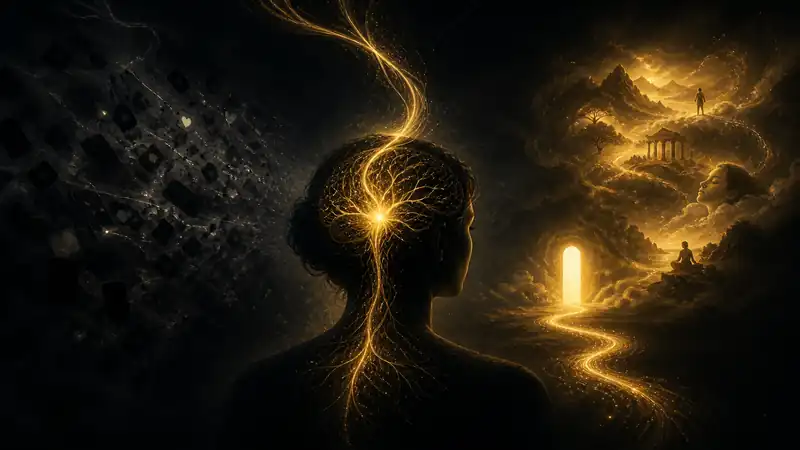
Most people think they consciously create their lives. This article explores how attention, visualization, neuroplasticity, and subconscious programming quietly shape the future.
A few years ago, I noticed something that completely changed the way I looked at personal growth, psychology, manifestation, and human behavior. At first, it seemed like a coincidence. Then it happened again. And again. Eventually, the pattern became too obvious to ignore.
Whenever I was preparing for a major life change, I had a habit of mentally stepping into the future before it arrived. I would imagine the life I wanted to create and feel every detail of it.
Before moving to a new city, I would create a list of requirements. I wanted a certain budget, a certain number of rooms, natural light, a beautiful view, the top floor, nearby nature, and a place where my pets would be welcome.
Then I would spend weeks checking the market, comparing listings, and seeing whether what I wanted even existed. More often than not, there were only one or two options that matched everything on the list. Yet somehow, I always ended up closing the deal on one of them.
At the time, I never thought of this as manifestation. I certainly did not think I had discovered some secret law of the universe. What fascinated me was the consistency.
The same thing happened with courses I wanted to study, projects I wanted to launch, and opportunities I hoped would appear. I would become emotionally familiar with the possibility before it existed. I would think about it, visualize it, imagine how it would feel, and mentally rehearse it. Then, months or years later, I would often find myself living inside a reality that looked remarkably similar to what I had imagined.
The older I became, the more I realized this was not simply about getting what I wanted. It was about attention. The mind moves toward what becomes familiar. The brain notices opportunities connected to what it repeatedly focuses on.
What we rehearse internally influences what we recognize externally. Looking back, I can see that visualization was not changing reality by magic. It was changing me. It was influencing my decisions, my awareness, my confidence, and my willingness to take action when opportunities appeared.
Then something unexpected happened. Like millions of people around the world, I slowly replaced imagination with scrolling. The final moments before sleep, which had once belonged to reflection, possibility, and visualization, became occupied by videos, social media feeds, opinions, news stories, and endless streams of content.
It happened gradually enough that I barely noticed. But eventually I realized something important had disappeared from my life. I had stopped imagining. The mental space once dedicated to my own future had become occupied by other people's lives.
This realization led me toward a fascinating question. If the subconscious mind responds to repeated imagery and emotional experiences, what happens when most of the images entering our minds are not chosen by us?
What happens when the final moments of the day are spent consuming content created by strangers instead of intentionally directing our attention toward the life we want to build? This question eventually led me to the work of Neville Goddard and one of the most famous thought experiments ever created around the subconscious mind.
The Neville Goddard Ladder Experiment is simple. Participants were instructed to spend several nights imagining themselves climbing a ladder before sleep. They were told to feel the ladder beneath their hands, experience the movement, and mentally immerse themselves in the activity. At the same time, they repeated the opposite statement during the day: 'I will not climb a ladder.'
According to Neville, many participants later found themselves climbing ladders through ordinary life circumstances. Whether one interprets the story spiritually, psychologically, or symbolically, the central lesson remains powerful. The subconscious mind appears to respond more strongly to repeated emotional imagery than to logical arguments.
Modern neuroscience provides an interesting perspective on why such experiments continue to resonate. The brain is constantly adapting through a process known as neuroplasticity. Every repeated thought strengthens a pathway.
Every repeated emotional response becomes easier to access. Every repeated focus of attention trains the brain to become more efficient at noticing similar experiences in the future. This means attention is not passive. Attention is training. Every day we are teaching our minds what matters, what deserves focus, and what should be ignored.
This understanding transformed how I viewed my own experiences. When I repeatedly imagined a future home, a project, or a new chapter of life, I was not necessarily forcing reality to bend to my wishes. Instead, I was becoming familiar with a possibility.
I was training my mind to recognize opportunities connected to that vision. My behavior gradually aligned with it. My decisions aligned with it. My willingness to act aligned with it. Over time, the external world began reflecting the direction I had already rehearsed internally.
At the same time, experience taught me an equally important lesson. Not everything we visualize is necessarily good for us. Some things I manifested eventually revealed themselves as misaligned with my deeper values. There were opportunities I was excited to receive that later required me to leave.
There were situations that looked attractive from a distance but eventually required self-protection and strong boundaries. This is why I no longer believe visualization should be treated as a tool for controlling life. Instead, I see it as a partnership between intention and surrender.
Today, my approach is different. I still visualize. I still dream. I still imagine possibilities. But I also release them. I give them to God. I allow room for a greater intelligence than my own preferences. Sometimes what we desperately want is not what we truly need. Sometimes a closed door is protection. Sometimes a delay is preparation. Sometimes what appears to be rejection is actually redirection toward something more aligned.
The subconscious mind is powerful, but wisdom requires humility. Intention without surrender can easily become attachment. This perspective becomes especially important in today's world because we are living inside the most competitive attention economy in human history. Every platform is fighting for our focus. Every notification wants a reaction. Every algorithm wants another minute of our time.
The challenge is not that social media exists. The challenge is that unconscious consumption can slowly replace conscious creation. When every spare moment is filled with stimulation, imagination loses the space it needs to operate. We stop asking what we want to build and start reacting to whatever appears in front of us.
Both neuroscience and contemplative traditions place unusual importance on the period before sleep. During this transition, the analytical mind relaxes and mental imagery becomes more vivid. What occupies our attention during this period often leaves a deeper impression than we realize.
This is why the final twenty minutes of the day deserve more respect. They are not simply the end of the day. They are the beginning of tomorrow. The images, emotions, worries, and possibilities we carry into sleep become part of the psychological landscape we wake up to the next morning.
If there is one experiment worth trying, it is this. For thirty days, put your phone away before sleep. Choose one meaningful goal. Not ten goals. One. Spend time imagining it clearly. Feel what it would be like if it already existed. Then release it. Give it to God.
Trust that what is aligned will unfold in its proper time. Observe not only what changes externally, but what changes within you. Notice your focus, your confidence, your decisions, and your willingness to act. The most important transformations usually begin internally long before they become visible externally.
The greatest insight I have gained from all of this is surprisingly simple. The subconscious mind is always listening. It listens to what we repeatedly think, repeatedly feel, repeatedly imagine, and repeatedly rehearse.
The ladder was never really about a ladder. It was about discovering that we are constantly programming ourselves through attention. The real question is whether those instructions are coming from our own vision, values, and relationship with God, or from the endless stream of content competing for space inside our minds.
Tonight, before you fall asleep, pay attention to what enters your awareness last. Because those final moments are not simply ending today. They may be quietly shaping tomorrow.
