
Donec efficitur, ligula ut lacinia
viverra, lorem lacus.
Donec efficitur, ligula ut lacinia
viverra, lorem lacus.
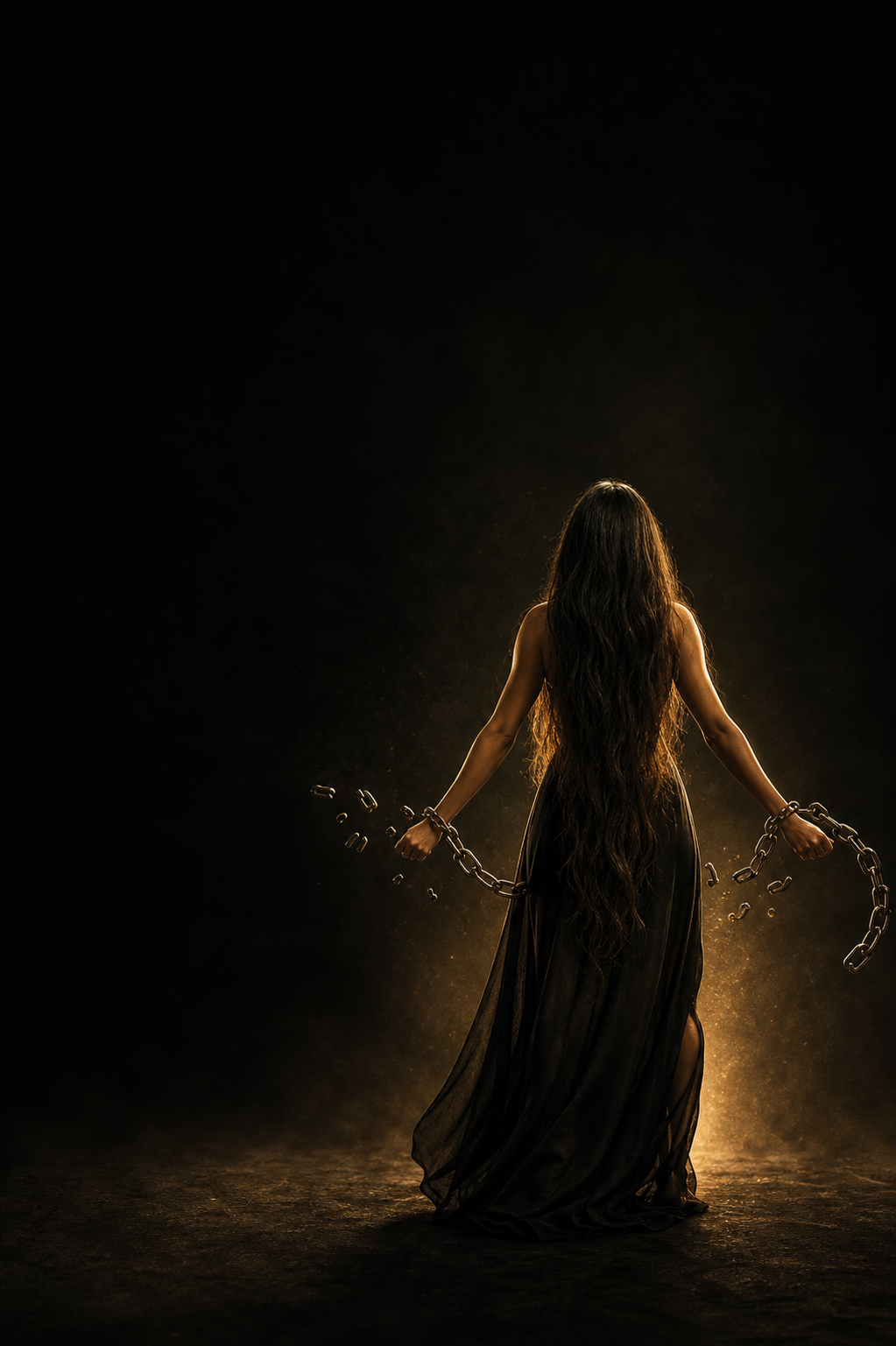
What looks like rebellion may be the memory of everything women were once forbidden to refuse.
I keep seeing the same confession appear in different voices: “I do not want children.” Sometimes it is said softly, almost apologetically. Sometimes it arrives with anger. Sometimes it sounds like freedom spoken aloud for the first time, by someone who is still waiting to be punished for it.
People call it a crisis. Birth rates are falling, women are speaking more openly about what raising children can cost them, and the old dream of becoming a wife and mother no longer seems to live automatically inside every woman.
I used to look at this as one of the programs created by feminism. I still believe feminism played a part, but not because it taught women to hate motherhood. It separated womanhood from obligation. It gave women the language to ask whether the life presented to them was truly theirs, or simply the only life they had ever been allowed to imagine.
I also believe that when people become balanced within themselves, when they can stand on their own feet and enter a healthy relationship without needing another person to rescue them, the wish to create can arise naturally. For some, that creation becomes children. For others, it becomes art, service, healing, business, community, or a body of work that continues speaking after they are gone. Human beings need meaning, but meaning does not wear the same face in every life.
To understand why so many women are choosing differently now, we have to look behind them. Not only at their mothers, but at the long corridor of women who came before.
For most of our history, marriage was not merely romance. It often determined whether a woman could survive respectably. In England, married women generally surrendered control of their property to their husbands until reforms beginning in 1870. Only later did the law recognise a married woman’s right to control what belonged to her.
Imagine what that does to love. Imagine having to call dependence devotion because there is no dignified road leading out.
The world was built largely by men, ruled by men, and interpreted through male needs. Physical strength became proof of authority, as though the human being were only a body capable of lifting, fighting, and building. But a person cannot be measured through muscle alone.
Some spiritual traditions speak of physical, etheric, emotional, mental, and spiritual bodies. Whether we understand these literally or symbolically, the truth beneath the image matters: we operate through more than flesh. No machine, however intelligent, can live a human emotion for us. No amount of physical power can replace the capacity to feel, connect, soothe, understand, and give meaning to experience.
Women were often called too emotional to make serious decisions. Yet what was labelled emotional weakness was frequently a nervous system living without safety. A woman filled with rage is not always revealing her nature. Sometimes she is revealing how long she has been unheard.
She may be exhausted from carrying the home while being told that shelter and food should be enough. Her partner leaves each morning, enters a social world, builds a career, develops expertise, and accumulates financial safety. She stays behind as housekeeper, cook, cleaner, emotional regulator, and mother, with no protected time to discover what else lives inside her.
The labour may be shared in theory, yet the invisible remembering remains hers. She notices what is missing. She anticipates what will be needed. She carries the house inside her mind even when she is no longer standing in it.
Then one day, after years of helping everyone else become themselves, she may no longer know how to answer the simplest question: “What do I need?”
This is not an attack on homemaking. A woman may choose it and find deep meaning there. The wound begins when service is demanded, dependency is romanticised, and the life supporting everyone else is treated as if it has no life of its own.
History contains objects that say more than entire speeches. In early modern Britain, a woman judged to have a “vicious tongue” could be placed in a Scold’s Bridle, an iron restraint fitted around her head, sometimes with a plate pressing against the tongue. It did not merely stop speech. It turned her silence into a public performance.
The message travelled further than the woman wearing it: do not argue, do not complain, do not expose what happens behind closed doors.
Almost every woman carries an ancestral memory of sexual abuse passed down by the women before her; a legacy living through inherited fear, embodied vigilance, family roles, silences, warnings, and survival patterns transmitted from one generation to the next.
The history continues in quieter forms. A woman may not feel emotionally open or physically willing, yet agree to sex because her partner threatens to find someone else, accuses her of cheating, withdraws affection, or turns rejection into a punishment. To avoid conflict, she abandons herself.
Each time this happens, something is taught beneath language: his need matters more than her inner reality. Her body is part of the relationship contract. Peace can only be maintained if she disappears.
Some men live in adult bodies while their emotional lives remain frozen at the age when rejection first felt unbearable. They interpret a boundary as humiliation. Instead of staying present with discomfort, they attack, accuse, threaten, or retreat. This is not masculinity. It is an unhealed survival response wearing the clothes of authority.
Women can carry the same unfinished wounds. We often choose partners through the emotional programs written in our first home. What we did not receive from our parents, we search for in romantic love. The child who had to earn tenderness may become the adult who confuses struggle with intimacy. The child who was abandoned may cling to someone who repeatedly threatens to leave.
This is why toxic relationships can feel strangely familiar. The psyche does not always search for what is healthy. It often searches for a chance to complete what once remained unfinished.
Modern women are not only making different choices. They are reacting to centuries of choices made for them.
Every movement away from restriction passes through extremes before it finds balance. A woman who watched her mother lose herself may protect independence as if her life depends on it. Sometimes it does. She may choose career, creative work, financial autonomy, travel, or solitude because these are not distractions from life. They are the first experiences that make her feel her life belongs to her.
At another extreme, some women turn visibility into currency, offering fragments of their bodies to strangers while remaining frightened of the intimacy that asks for the whole self. I do not say this to condemn them. I see it as another expression of a culture that taught women to perform desirability before teaching them safety.
The falling birth rate is not, to me, proof that women are broken. It is a collective message. Many women are no longer willing to enter motherhood under conditions that require self-erasure. Others simply do not desire it. Both realities can exist without turning one into a moral failure.
Feminism did not create the wound. It removed the lock from the door. Some women walked out and discovered they never wanted to return. Some are still standing in the doorway, trying to understand whether they are leaving motherhood itself or only the painful version they inherited.
When I look at healthy relationships, I notice a different pattern. Both people have a life they are responsible for building. Both are developing emotionally, financially, and professionally. Neither is chosen mainly as protection from loneliness, abandonment, or survival.
They make each other’s needs important without making either person disappear. They create space for one another to grow, and because growth is happening in safety rather than fear, it often becomes astonishing.
We need more relationships in which the masculine and feminine are truly embodied, not performed as rigid costumes. Direction and receptivity. Strength and tenderness. Protection and creation. These qualities can exist within both people, expressed in different proportions, without either person becoming smaller.
Once we taste that kind of relationship, discernment changes. We no longer confuse control with protection or dependency with love. Anger may still visit, because healthy people are not emotionless, but it no longer has to harden into resentment. It is spoken, understood, and allowed to move before it begins making the body sick and the spirit die slowly while the relationship continues looking alive.
As more people become whole on their own and then share that wholeness with another, we can begin to understand true partnership. We can participate in the other person’s success without sabotaging our own. Their light is no longer evidence that ours is fading.
From that place, having children can become a shared creation rather than a social assignment. Not a box to check. Not proof of femininity, masculinity, adulthood, or success. A conscious choice made by two people who understand what they are offering and what they must be willing to carry.
Perhaps the balance we are waiting for will come through newer generations who no longer build relationships from terror. Fewer people may choose the traditional path, but those who do may enter it with more freedom, honesty, and emotional responsibility than generations before them were allowed.
Find yourself before asking another person to define you. Learn your needs before resenting someone for not reading them. Build a life around what is true for you, then meet the person with whom truth can expand.
Build bliss together, not as permanent happiness, but as the experience of being fully alive beside someone who does not require your disappearance.
Life is not about checking a list while dying slowly inside just to please society. It is not marriage, house, children, career, and retirement performed in the correct order while the soul remains absent from every room.
Life is about embodying the God-given gifts placed within us. For one person, that gift may become motherhood. For another, it may become healing, invention, art, leadership, or a form of love that has no familiar name.
The gifts look different because we are different. The tragedy is not that every woman does not want the same life. The tragedy is how many people have lived a life that was never truly theirs.
Continue exploring the hidden forces that shape identity, love, and human behaviour with The Psyche Unveiled. Subscribe for future articles that put language around the things we often feel long before we understand them.
